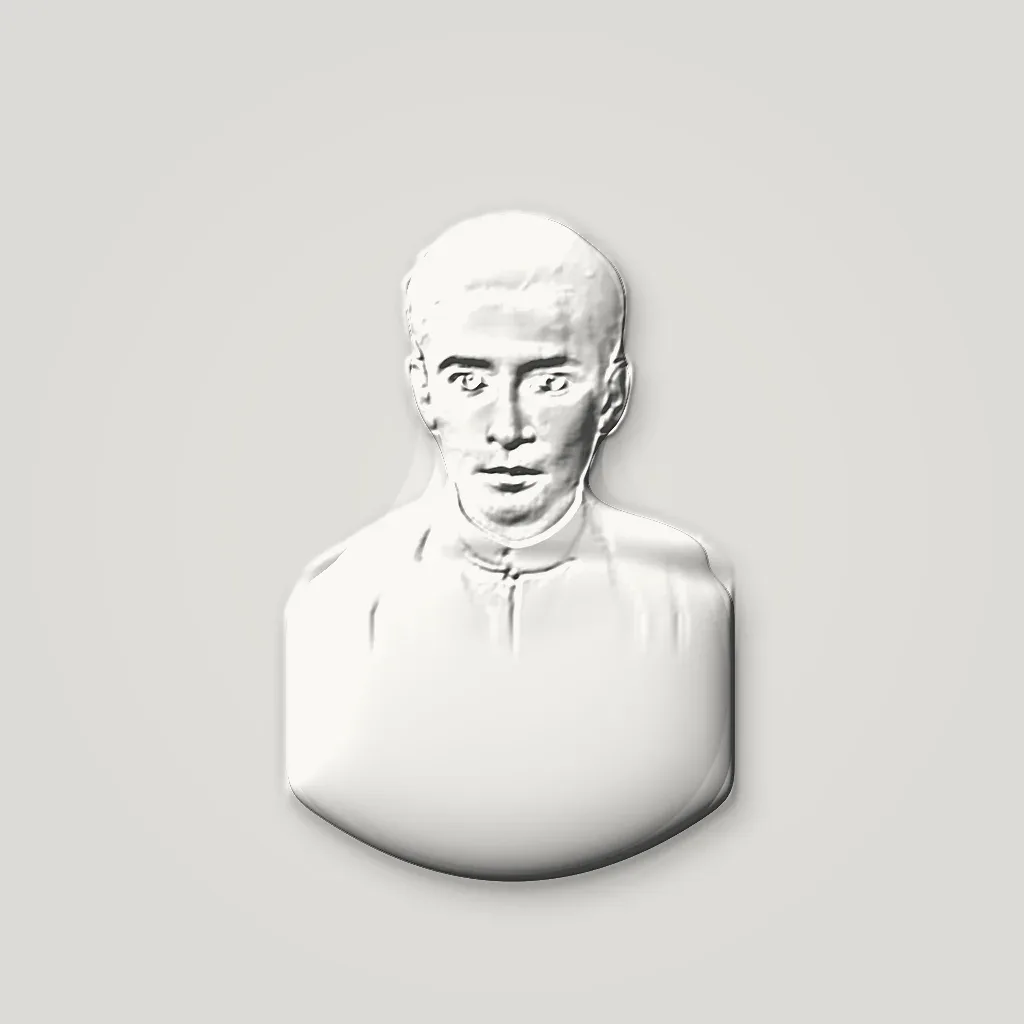
A Rohingya health worker and leprosy specialist who served hospitals and rural health centres across Arakan for three decades, and an unsung builder of his community: he helped turn a village hut into a health centre, pressed for Taung Pyo Let Wai's clinic to become a hospital, and in retirement taught and treated people in the villages around Bawli Bazaar and organised water supplies for mosques.
The forgotten ray
“Ashá táilé rasta neele”
This was one of the sayings that Health Officer U Mya Than often used when offering advice and encouragement. He frequently quoted the original English proverb, “Where there is a will, there is a way.” It was one of his favorite sayings.
The name U Mya Than may be unfamiliar to many readers. Although he was not a nationally renowned figure, he was an unsung individual who devoted himself to serving his country and his people. As a healthcare worker, he carried out his duties faithfully, conscientiously, and with genuine dedication to the well-being of those he served.
Maung Mya Than was born in 1935 in Bawli Bazaar, Maungdaw, Arakan State, to Qazi Bokhtar Mahmud and Daw Amina Chowdhury. His birth name was Delwar Ahmad. His father served as a medical officer in the British Army and as a local medical officer in the Bawli area. He was also a Qazi appointed by the British administration with judicial authority. His mother was a well-known practitioner of traditional medicine and came from the Bawli family lineage. Mya Than was the fourth of six brothers. When he was around thirteen years old, his father, Qazi Bokhtar Mahmud, passed away. Thereafter, Mya Than grew up under the care and guidance of his mother and elder brother.
Maung Mya Than studied up to the sixth standard at the Amir Ali Urdu School of that period. When the school was later converted into a Burmese-English National School, he continued his education there. He subsequently completed his secondary education at Maungdaw High School. He had initially been interested in joining the Burmese Army, but circumstances prevented him from doing so. Influenced by his family background, he instead developed an interest in medicine and pursued medical training at the Health Assistant Training School at Aung San Stadium in Rangoon (Institute of Community Health, which was later relocated and expanded in Magway).
Maung Mya Than began his career as a laboratory technician at Maungdaw Hospital. In 1964, he was appointed Grade I Laboratory Supervisor at Buthidaung General Hospital, where he served until 1974. From 1974 to 1981, he served as a Grade II Supervisor in the Leprosy Department of Sittwe General Hospital. From 1981 to 1985, he worked as a supervisor in the Leprosy Department at Buthidaung Township Hospital. From 1985 to 1990, he served as a Health Officer at Thabeik Taung Rural Health Centre, and from 1990 to 1995, he served in the same capacity at Taung Pyo Health Centre. In 1995, he retired from government service. He spent the remaining years of his life peacefully in his native Bawli Bazaar.
During his retirement, in addition to providing medical care, U Mya Than volunteered as a teacher in the villages of Kyein Chaung, Laung Don, and Done Paik. He actively taught children who were unable to attend school because their families lacked the financial means to support their education. He also provided financial assistance, whenever possible, to students from disadvantaged families. He regularly conducted basic health education and first-aid training for people living in rural communities. He also provided free medical treatment to a remarkable number of people, setting an admirable example of service to the community. In addition, he took a particular interest in improving access to water at mosques and other religious buildings, organizing initiatives to ensure an adequate water supply. He called this initiative “Water Supply for All.”
During his years of service, Health Officer U Mya Than undoubtedly helped save many lives through health education and medical treatment. In addition, some of his lasting contributions to the country and the public, which continue to benefit local communities to this day, include the following:
(a) When U Mya Than was assigned to Thabeik Taung, the rural health center in the Rakhine village of Thabeik Taung was little more than a small hut. During his period of service there, through his tireless efforts day and night, he mobilized the collective support of the villagers and helped transform the small clinic into a more substantial and permanent healthcare facility. To this day, the villagers remember him for his contribution.
(b) Health Officer U Mya Than also made significant efforts toward upgrading the Taung Pyo Let Wai Health Centre into a larger hospital. During General Khin Nyunt’s visit to Taung Pyo Let Wai in 1993, U Mya Than met with him and explained that the existing health centre was inadequate for the number of patients in the area. He proposed that the facility be upgraded to a hospital. When asked about what would be required for such an expansion, he also discussed the needs and requirements for enlarging and developing the facility. Following General Khin Nyunt’s visit, the health centre was upgraded to a station hospital, and the facility itself was expanded and reconstructed. The station hospital that stands in Taung Pyo Let Wai today was therefore, according to this account, an outcome of Health Officer U Mya Than’s persistent efforts. At the time, Myanma Alinn and Kyemon newspapers reportedly covered General Khin Nyunt’s visit and published accounts of their meeting and discussions.
(c) During the 1993 refugee repatriation programme, Health Officer U Mya Than was selected to serve as a member of the medical team. In this capacity, he actively assisted refugees returning to their original homes.
(d) U Mya Than was a Rohingya healthcare professional with specialized expertise in leprosy. Because of his knowledge and experience in this field, he was specially transferred from Buthidaung Township Hospital to Sittwe General Hospital. Even after his retirement, he was frequently invited by the relevant hospitals to deliver health-education lectures on leprosy.
Throughout his professional career, U Mya Than devoted himself wholeheartedly to serving the public without distinction of ethnicity or religion. Even in retirement, he continued working for the welfare of his community and the wider public.
In 1961, Maung Mya Than married Daw Ma Nu, also known as Husson Jahan, the niece of Township Officer Furuk Ahmad and the third daughter of Saya Gyi Muhammad Hassan. She was descended from the Bawli and Qazi families. The couple had nine children—four daughters, Thein Thein Nu, Than Than Nu, Thein Nu, and Than Than Htwe; and five sons, Than Myint, Thein Hteik, Than Hteik, Than Tun, and Aye Tun.
Health Officer U Mya Than, who held Registration No. AK-155594, also came from a family whose members served their country and community in various capacities. His eldest brother, U Bedar Ahmad, served as a military medical officer appointed under the British administration. U Nesar Ahmad served as secretary of a village administrative body; U Maung Nu served as a high school headmaster; and his younger brother, U Mya Sein, served as a state malaria-control officer. Each contributed to public service in his respective field. His youngest brother, U Mahmud, unfortunately passed away while studying at Kyaukphyu Education College. His only sister, Daw Naw Fiza, remains alive to this day.
Health Officer U Mya Than was a man who lived a simple and modest life. He was particularly fond of children. It is said that whenever he returned from somewhere, he would almost always bring snacks in his hands for the children in his neighborhood. Whenever he went for a walk through the village, children would often gather around him. To them, the sight of “Doctor Nana” immediately brought to mind the treats he would give them. He had a great passion for reading and keeping a diary. He was proficient in both reading and writing Urdu and Bengali. He was also interested in architecture and craftsmanship. During his spare time, he enjoyed working at home with wood and cement, making chairs, tables, shelves, and other pieces in a variety of creative designs. One particularly remarkable characteristic was that, although he was naturally left-handed, he could write skillfully with either hand. As for sports, he was especially fond of playing badminton.
On the morning of Thursday, February 12, 2009, Health Officer U Mya Than bade farewell to his beloved children and returned to Allah. He had been born on a Thursday, and it was also on a Thursday that he passed away. His remains were laid to rest at the Bawli Cemetery in Kyaik Chaung, Laung Don. May Almighty Allah grant him the highest and most honored place in the Hereafter. Ameen.