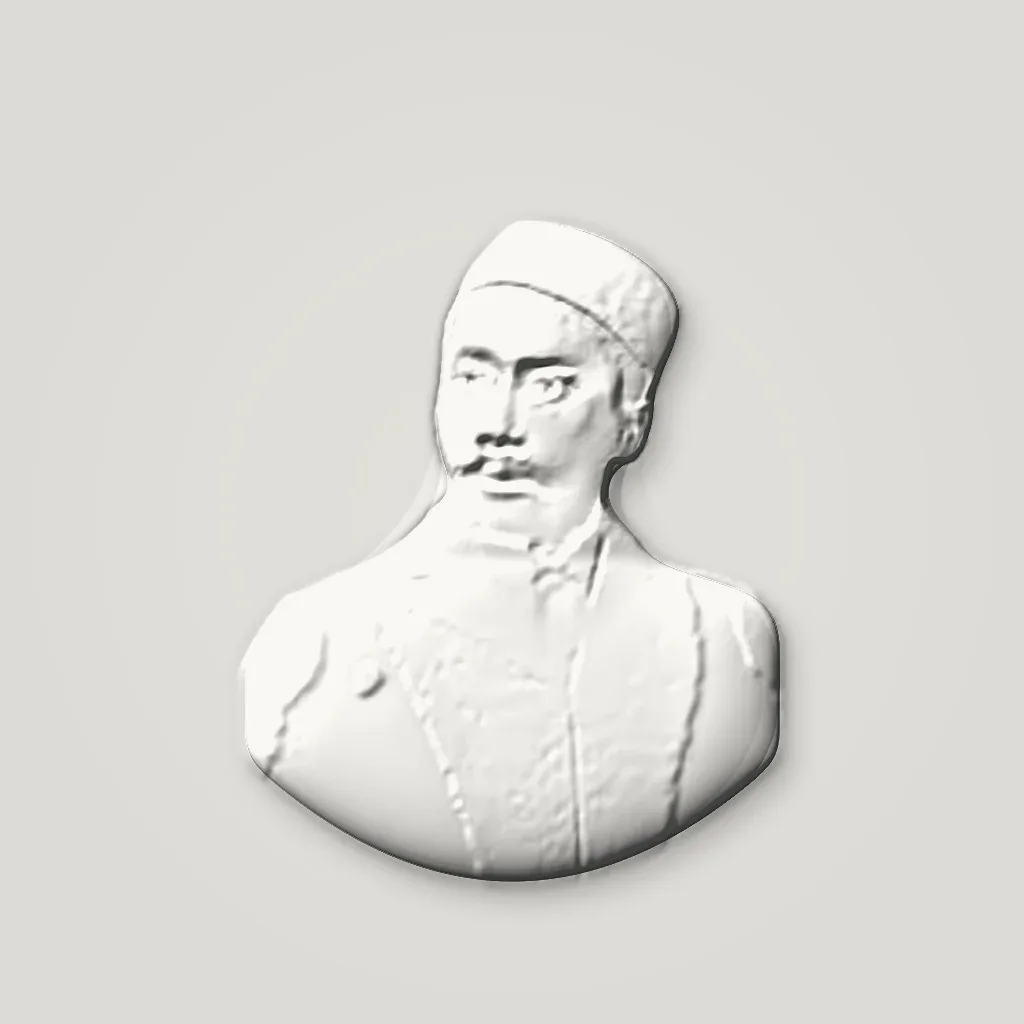
Barrister-at-law, Municipal Commissioner and the leading businessman of colonial-era Sittwe. He ran cargo, trading and shipping concerns on which more than a thousand people depended, carried coal and petroleum under government contract, and came from a famously generous family: his father paid for the hospital's expansion and built schools and mosques.
The wealthiest man in Sittwe
During the colonial period, one of the most prominent wealthy and educated figures in Sittwe was none other than the wealthy businessman Marakan. He was a native of Sittwe and was a barrister-at-law. His full name was Mr. E. Kader Marakan.
Mr. E. Kader Marakan had served as a Municipal Commissioner of Sittwe since 1906 and was also an Honorary Magistrate. He was a Vice-President of the Arakan Anjuman-i-Islamia and a member of the governing board of Sittwe Government High School. (The Arakan Anjuman-i-Islamia was founded in 1909 by Saya Gyi Miah Abdul Hamid, who served as its president, while T. U. Ahmed, editor-in-chief of The Arakan News, the first newspaper in Arakan, served as its honorary secretary.) Marakan controlled several major commercial enterprises in Sittwe, including cargo handling, general trading, and commission agency businesses. He also owned a large ship as well as fifteen cargo vessels, each capable of carrying between 50 and 60 tons, and more than a thousand employees depended on his businesses for their livelihoods. He established the firm Maracan E. K., Well St., Sub-Agent, Burma Oil Co., through which he secured important government contracts for the transportation of coal and petroleum and exported these commodities abroad. His business associates and representatives included Thomas Brock & Co., 29 Waterloo Street, Glasgow, and Mr. A. J. Ismay, Stoke Newington, London.
The business enterprise later managed by E. Kader Marakan was originally founded by his father, the wealthy businessman Mr. E. S. Maracan, who was a native of Karaikal, Pondicherry, and came to Sittwe around the 1850s. E. S. Maracan was known as a generous philanthropist who contributed extensively to charitable causes. At his own expense, he financed the expansion of the main building of the General Hospital and donated several other buildings. He also constructed and donated an impressive mosque and an English school. Beyond Sittwe, he funded the construction of schools and mosques in other townships as well. He was regarded as one of the leaders of the Muslim community of his time and served for a period as a Municipal Commissioner, contributing to the welfare of the public. Mr. E. S. Maracan passed away in 1960.
After his father’s death, E. Kader Marakan became the administrator of the family estate and succeeded his father in managing the family’s affairs and enterprises. At the time, the property left by his father was valued at more than 300,000 rupees. He transferred the school founded by his father to the Municipal Committee, which later administered and supervised it in association with the local Government High School. In honor of its founder, the school was renamed E. S. Maracan’s Anglo-Vernacular School.
Among the children of E. K. Marakan, two of his sons became prominent figures in Burmese politics: his eldest son, E. G. S. Maracan (Esmail Ghani Shah Maracan), and E. D. S. Maracan (Esmail Dawood Shah Maracan). E. G. S. Maracan was widely known as Gani Maracan (Gani Markin). In 1936, Gani Maracan became a legislative representative for northern Sittwe District. He was also an enthusiastic horseman who bred horses and regularly participated in horse races, in which he also won championships. E. D. S. Maracan, Dawood Shah Maracan, was popularly known as Tanbi Saheb and was one of the leaders who worked to bring an end to the communal violence of 1942. Both brothers were awarded medals associated with King George VI, the father of Queen Elizabeth II.
The Marakan family was exceptionally generous and deeply committed to charitable giving. It is said that the land on which U Ottama Park is located was also donated by the Marakan family. In addition to Sittwe, the family made charitable contributions and owned properties in various other towns and cities across Burma.