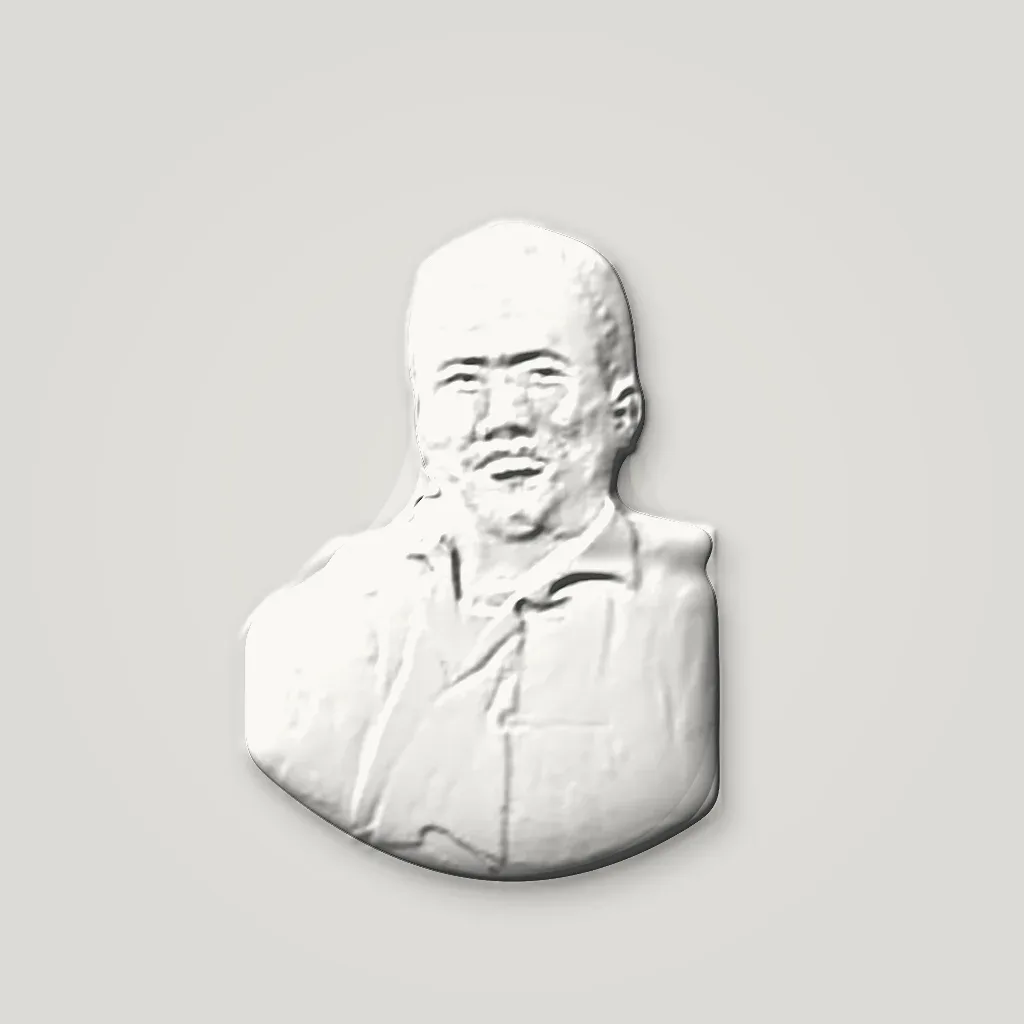
Writer, novelist, poet, editor and publisher from Taungup, remembered as "the man who asked for heaven and earth". He edited Myawaddy Magazine and other leading journals, wrote dozens of books, many of them novels, translated works of war and military history, and produced one of Burma's earliest translated works of wartime memoir literature.
The man who asked for heaven and earth
Tekkatho Nanda Meik, who was figuratively described as “one who asked for heaven and earth,” was a prominent Muslim figure from Arakan. He was renowned as a writer, novelist, poet, editor, and literary publisher, as well as the author of one of Burma’s earliest translated works of wartime memoir literature.
Tekkatho Nanda Meik was born on Thursday, March 8, 1923, during the colonial period, in Taungup, Thandwe District. He was the son of U Maung Maung Gyi, a township official in Taungup, and Daw Shwe. He had three siblings: Maung Tin Aung, Maung Tin Maung, and Ma Tin Tin. He was the elder of a pair of twins. His birth name was Mohammed Ali, also known as Maung Tin Aung, while his parents affectionately called him “Ko Ko.”
Mohammed Ali received his early education at the National Burmese Middle School in Taungup, where he studied up to the fifth standard. After moving with his family to Thandwe, he passed the matriculation examination in 1946 from the Government Anglo-Burmese High School in Thandwe, earning a distinction in English. He subsequently continued his education at Rangoon University. While serving as an executive member of the Thandwe Students’ Union, he participated alongside lecturer U Kyaw Yin in anti-fascist student movements during the Japanese occupation.
Nanda Meik entered the literary world with his poem “Maung Do Rakhine Pyi” (Our Arakan), published in the December 1947 issue of Journal Kyaw (Vol. 11, No. 3). The poem is believed to be his earliest known literary work.
In 1949–50, Nanda Meik served as associate editor of the Burmese-language section of the Rangoon University Annual Magazine. He also served as editor of the magazine of the Rangoon University Arakanese Students’ Association and as editor of the magazine of the Rangoon University Burmese Muslim Students’ Association. In addition, he held the position of Vice-President of the Rangoon University Arakanese Students’ Association. In a short-story competition organized by the Rangoon University Arakanese Association, he won first prize for his short story “Kabyar Ta Kyawt”, which he submitted under the name “Maung Tin Aung (B.A. Senior)”. During the same year, his play “Ko Pyauk Say Lone” (The Invisibility Pill) was published in the Rangoon University Annual Magazine (Vol. 1, No. 3). His poem “Khit-e-Kyemon” (Mirror of the Age), described as a tay gyo (lyrical prelude), was also published in Taw Win Magazine and in the magazine of the Arakanese Students’ Association.
In 1950, Nanda Meik left university without sitting for his final B.A. examination. That year, he wrote and published his first full-length novel, “Nandar Pearl”. During the Japanese occupation, he had also participated in anti-Japanese resistance activities alongside U Kyaw Yin, who later became Rector of Mandalay University. After leaving university, Nanda Meik worked as an assistant editor at the Toe Tat Yay (Progress) newspaper. In 1953, he became a high school teacher at the Government High School in Wakema.
In 1954, Nanda Meik became editor of Yaung Chi Journal, published by Myawaddy Magazine. In the same year, he also took on the roles of managing editor and editor-in-chief of Myawaddy Magazine, positions he held until 1960. During this period, he published the full-length novel Maung Gyi Lar Par Hay (Maung Gyi, Come Here). In 1956, he wrote and published the novel Pan Taing Hmwe Par Say (May Every Flower Be Fragrant). In 1960, he served as editor of Yoke Shin Padetha Magazine and as editor-in-chief of Nawaday Magazine. Together with the writer Moe Wai, he also took the lead in publishing Detective Magazine, serving as its editor. He also wrote and published Shwe Pyi Gyi, a novel set against the background of Burmese history, and Pan Phwet Tan,a romantic novel based on traditional Arakanese customs and culture.
In 1961, Nanda Meik published several original novels, including Thway Thitsar (Blood Oath), Saw Kyo Hlae Par, Chit Thaw Ni Ni (Beloved Ni Ni), Achit Lan Kalay Winga Bar (The Labyrinth of Love), Moe Tein Ko Hmyaw (Looking Toward the Clouds), and Moe Tein Ko Hmar. He also compiled a collection of literary essays and published a book on writing entitled Sar Yay Chin Thaw Thu Myar Tho (To Those Who Want to Write). In 1963, he published the war novel Sit Kyaung Chi Thaw.
In 1964, Nanda Meik published the books Chindwin Kyaw Hlyin (When We Cross the Chindwin), Thway Ko Lan Khin Ywe (Paving the Road with Blood), and Thin Kyar Pay Par Lay Oo Saya (Please Continue to Teach Us, Teacher). In 1965, he wrote and published a number of full-length translated works on war and military history, including The Anti-Japanese Resistance, Life as Fragile as a Leaf, The Battle of Imphal, Kalein Seit Ngyan Sin, Burma: The Battlefield, and Through Mandalay: The Stages of Battle.
In 1966, Nanda Meik published several full-length translated works, including Thway Chaung Si Taik Pwe (The Battle of Flowing Blood), Thanlwin Myit Kan Taik Pwe (The Battle on the Banks of the Thanlwin River), Let Ta Kan Taik Pwe (Close-Quarters Battle), Ta Ti Ya Mee Kyi (The Third Firebomb), Sit Pyay (War Refugee), Sin Yal, Sanit Yal, Lu Thar Yal, and Zet Tat Phwe. In 1967, he published a number of full-length books, including Ah-Thay Khan Tat Su (The Suicide Unit), Saipan Kyun Taik Pwe (The Battle of Saipan), Htaung Ko Yar Lay Se Hnit (1942), Pan War Sit Kyaung (The Pan Wa Column), Myawaddy Sit Kyaung (The Myawaddy Column), Myitkyina Taik Pwe (The Battle of Myitkyina), Meinma Thutethana (Women: A Study), Volumes 1 and 2, and Yone Kyi Chet Atwet Athak Sunt Thu Myar (Those Who Sacrificed Their Lives for Their Beliefs). In 1968, he published such books as Bandula Khan Tat (Bandula Fort), Saw Nanda, and Moe Tein Ko Say. In 1969, he published the full-length translated works Theikpan Sone Htauk (The Science Detective) and Thone Yaung Chae Tase Thinbaw (The Three-Colored Ghost Ship). In 1971, he published Bawa Thitsar Myitta Hlaing (Waves of Life, Loyalty, and Love) and Ta Theint Theint Done. In 1977, he published the novels Se Pyi Htaung Chawt Tot Ma Pyone and Taung Ta Kar Taw, San Kaw Ne Kyar Htaung.
In 1981, Nanda Meik published Following Thay Min Nauk Tho Chay Yar Kauk Thaw (the Footsteps of Death), a two-volume work.
In 1982, he published the translated works Titanic (two volumes) and Thway Set Chay Yar (Trail of Blood), also in two volumes. In 1983, he published Ta Thaung Hmar Ta Yauk (One in Ten Thousand) and Than Khaung Yan Khunit Mee Nit (Seven Minutes Past Midnight). In 1984, he published several books, including Maha Khayee Shay (The Great Long Journey), Moe Pyo Ma Pyo, A-Twe Sein Sein, and Hitler’s Amwe (Hitler’s Legacy).
In 1985, he published Typhoon (Taik Fun), Naung Udan Be Ma Kyei Sayar, and the two-volume Bilu Si, Lu Si. In 1986, he wrote and published several full-length translated works, including Thanmani Thitsar (Steel Loyalty”) and 34-Ashay (34-East).
Tekkatho Nanda Meik remained devoted to his literary work without interruption until the final days of his life. At the age of 64, he passed away at 10:05 p.m. on Saturday, November 15, 1986, at House No. 991, Aung Mingalar Lane, Ywama East, Insein. At the time of his death, he was survived by his wife, Daw Than Nu; his daughters, Saw Thida Nanda Meik and Saw Sanda Nanda Meik; and his sons, Zeya Nanda Meik, Seinda Nanda Meik, and Okka Nanda Meik. Following his death, his twin brother, Tekkatho Zaw Min, took the lead in establishing the “Twin Brothers” Publishing House (Ahmwar Nyi Naung) in his memory. In addition, some of Nanda Meik’s former students took the initiative to compile and publish a commemorative book entitled Tekkatho Nanda Meik, or The Man Who Asked for Heaven and Earth in 2004.